


Is Professional Odor Removal Worth It for Airbnb?

Table of Contents
- When DIY Odor Removal Fails Your Airbnb
- The Real Impact of Odors on Airbnb Guest Satisfaction
- Professional Odor Removal Cost for Homes: What to Expect
- How to Get Cigarette Smoke Smell Out of a Rental Property
- The ROI of Professional Odor Removal for Airbnb Hosts
- Odor-Proofing Your Rental: Preventative Maintenance Strategies
- Conclusion: Making the Right Choice for Your Rental
- Frequently Asked Questions
Last Updated: October 1, 2026
When DIY Odor Removal Fails Your Airbnb
The moment a guest walks in and smells stale cigarette smoke or pet odor, the review is already written in their head. That's the reality behind the question of is professional odor removal worth it for airbnb hosts. We've worked with property managers and short-term rental hosts long enough to know that smell is the one problem guests rarely forgive and almost always mention publicly.
DIY fixes work fine for a spilled glass of wine or a forgotten takeout container. They fail against the odors that actually threaten your listing: embedded cigarette smoke in drywall, pet dander soaked into carpet padding, or mildew colonizing a basement. These aren't surface problems, and surface treatments don't touch them.
Below, we break down when DIY stops working, what professional treatment actually costs, and how to decide if it's worth the spend for your specific property.
The Real Impact of Odors on Airbnb Guest Satisfaction
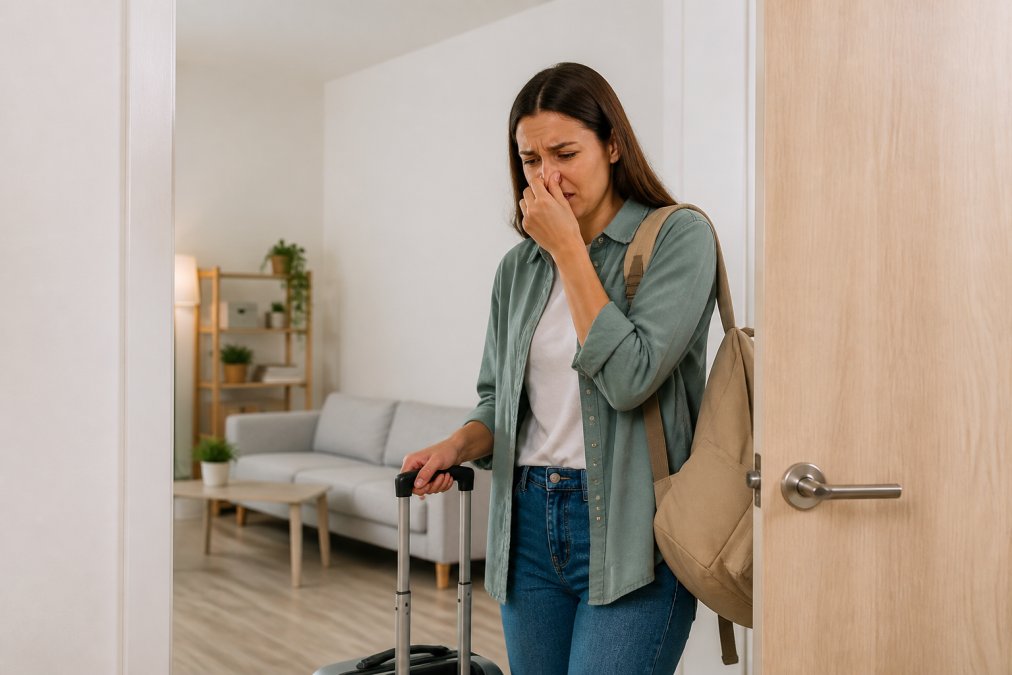
Odor is the single most common complaint that turns a five-star stay into a three-star review, and it's the one issue guests can't work around. A broken lamp gets mentioned politely. A musty smell gets described in detail, often with words like "unbearable" or "we almost left."
How Reviews and Superhost Status Are Affected
Guest satisfaction scores drive your placement in search results, and Airbnb weighs cleanliness heavily when calculating Superhost status. A single detailed complaint about odor can drag your cleanliness rating down for months, since ratings are averaged over a rolling window. The damage compounds: lower visibility means fewer bookings, which means fewer new reviews to dilute the bad one.
Professional Odor Removal Cost for Homes: What to Expect
Professional odor removal cost for homes varies widely based on square footage, odor severity, and whether the source is surface-level or embedded in building materials. Most providers quote per treatment rather than per hour, and heavy smoke or mold remediation typically costs more than a standard pet odor job.
Because pricing depends on so many variables, the honest answer is that you should request a quote rather than rely on a national average.
DIY vs. Professional: A Cost Comparison
| Approach | Upfront Cost | Time Investment | Success Rate on Embedded Odors |
|---|---|---|---|
| Store-bought sprays and candles | Low | Minutes per room | Very low; masks temporarily |
| Enzyme cleaners (DIY application) | Moderate | Several hours per room | Mixed; depends on surface |
| Ozone generator rental | Moderate | 1-2 days per room | Inconsistent; safety concerns |
| Professional-grade treatment | Higher per unit | Minimal host labor | High when applied correctly |
The table above isn't a knock on DIY. It's a reality check on what each option actually solves.
How to Get Cigarette Smoke Smell Out of a Rental Property
Knowing how to get cigarette smoke smell out of a rental property starts with understanding that smoke residue isn't just in the air. It bonds to paint, drywall, curtains, upholstery, and HVAC ductwork, which is why airing out a room rarely works.
Here's the sequence that actually addresses embedded smoke:
- Remove and launder all soft goods (curtains, bedding, throw pillows)
- Vacuum upholstery and carpets with a HEPA-filter vacuum
- Wipe down hard surfaces, including walls and ceilings
- Replace HVAC filters and clean vents
- Apply an odor neutralizer that reaches porous surfaces, not just the air
- Ventilate thoroughly and re-test after 24 hours
Why Masking Agents and Ozone Generators Fall Short
Masking agents, including most plug-in air fresheners and scented sprays, add a new smell on top of the old one. Guests notice both. An ozone generator can break down some odor molecules, but it requires the space to be completely empty during treatment and properly ventilated afterward, since ozone is a lung irritant at concentrations used for treatment.
The ROI of Professional Odor Removal for Airbnb Hosts
The return on professional odor removal is best measured in bookings you don't lose, not in dollars saved on cleaning supplies. Most competitors stop at that sentence. The useful version is a break-even calculation you can run against your own nightly rate.
The Break-Even Formula
Break-even nights = treatment cost ÷ your average nightly rate
What a Bad Review Actually Costs
A single detailed odor complaint does three things at once:
- Drops your cleanliness score. Ratings are averaged over a rolling window, so one bad score drags the average for months, not days.
- Suppresses visibility. Lower scores correlate with lower placement in search, which reduces impressions and bookings.
- Forces discounting. Hosts filling a gap after a cancellation often cut the nightly rate, which compounds the loss.
A Worked Example
Say your nightly rate is $180 and you get a quote of $400 for a whole-unit treatment on a smoke-affected property.
- Break-even: $400 ÷ $180 ≈ 2.2 nights
- If the smell costs you one cancellation and one lost booking, you've already lost more than the treatment cost
- Add the labor hours spent on failed DIY attempts and the gap widens further
Professional odor removal pays for itself when it prevents even one cancellation or one damaging review. Frame the decision as insurance against lost revenue, not as a cleaning expense.
Odor-Proofing Your Rental: Preventative Maintenance Strategies
Prevention costs less than remediation, every time. The hosts who rarely deal with odor complaints aren't lucky; they've built routines that stop smells before they embed. The checklist below is organized by mechanism, so you understand why each step works, not just that it's on a list.
Control the Air Path
Odors travel through the same channels as air. If you control the air path, you control where smells settle.
- Replace HVAC filters on a fixed schedule. A clogged filter recirculates odor particles instead of trapping them. Set a calendar reminder tied to your turnover cadence, not your memory.
- Clean vents and ductwork periodically. Smoke and pet dander accumulate on duct surfaces and re-release with every heating or cooling cycle.
- Ventilate between stays. Opening windows and running exhaust fans for a set period after checkout flushes stale air before the next guest arrives.
Treat Porous Surfaces Before They Absorb
Soft goods are where odors live longest. Protect them before they're exposed.
- Use mattress and pillow protectors that can be washed hot
- Deep clean upholstery and carpets between every long-term stay
- Launder curtains and throw pillows on a rotation, not just when they look dirty
- Consider a fabric protectant on high-contact upholstery to slow absorption
Set and Enforce the Rules
Policy is prevention. A clear rule stops the odor before it starts.
- Ban smoking explicitly in your listing and enforce it with a fee
- Keep pet-friendly units on a stricter cleaning rotation than non-pet units
- Address leaks and damp spots immediately to prevent mildew
- Run a quick smell check yourself before every check-in
Know the Trade-Offs
Prevention isn't free, and not every step pays off equally. HVAC filter changes are cheap and high-impact. Duct cleaning is more expensive and only worth it on a multi-year cycle or after a smoke event. Fabric protectants add cost per turnover but extend the life of upholstery. Match the spend to the risk in each unit.
Hosts managing multiple units who want to standardize turnover cleaning across properties rather than improvising each time.
Conclusion: Making the Right Choice for Your Rental
Odor problems don't resolve on their own, and the cost of ignoring them shows up in your reviews long before it shows up in your bank account. For hosts dealing with embedded smoke, pet dander, or mildew, professional-grade treatment is usually the faster and cheaper path once you factor in lost bookings and wasted DIY attempts.
Frequently Asked Questions
Is professional odor removal tax-deductible for rental property owners?
In most cases, yes. The IRS treats odor removal as a repair or maintenance expense for rental properties, so it's typically deductible as an ordinary and necessary business expense. Keep detailed receipts and records of the service. If the work is part of a larger renovation, it may need to be depreciated instead. Consult a tax professional to confirm how it applies to your specific situation.
How do bad odors impact Airbnb guest reviews and Superhost status?
Odors are one of the most common complaints in negative reviews. A lingering smell often leads to lower star ratings in cleanliness and overall experience, which directly threatens Superhost status. Airbnb requires a 4.8 average rating to qualify for Superhost. A few odor-related reviews can drop your average below that threshold, costing you the badge and the visibility boost that comes with it.
What is the difference between masking an odor and permanent odor neutralization?
Masking agents like air fresheners and scented sprays cover up smells temporarily. The odor molecules remain in carpets, upholstery, and HVAC systems, so the smell returns once the fragrance fades. Permanent neutralization uses professional-grade formulas that chemically break down odor molecules at the source. This eliminates the smell entirely rather than hiding it. For embedded odors from smoke, pets, or mold, neutralization is the only lasting solution.
How quickly can professional odor removal restore a property for the next guest?
Drop-and-go products are applied and left to work while you handle other turnover tasks. For heavy embedded odors like cigarette smoke or long-term pet dander, you may need to ventilate the space for a few hours after application. In most cases, the unit is guest-ready the same day, which keeps your booking calendar full.