


Remove Food Smells from Upholstery: 7 Proven Methods

Table of Contents
- Identify the Source of the Food Odor
- Prepare Your Upholstery for Cleaning
- How to Deodorize a Couch Naturally
- Best Professional Odor Eliminator for Upholstery
- Steam Cleaning to Remove Food Smells from Upholstery
- How Long Does It Take to Remove Odors from a Sofa
- Prevent Future Food Odors in Your Furniture
- Common Mistakes to Avoid When Removing Food Smells
- Frequently Asked Questions
Last Updated: October 2, 2026
Identify the Source of the Food Odor
Before you tackle the best ways to remove food smells upholstery, you need to pinpoint where the odor is coming from.
Start by locating the exact spot. Is it a single cushion or spread across multiple areas? Does the smell come from deep within the fabric or just the surface?
Next, consider what food caused the problem. Greasy foods like pizza or fried chicken penetrate fabric fibers differently than sugary drinks or acidic tomato sauce. Protein-based foods attract bacteria that create lingering smells.
Common food odor sources:
- Cooking smells soaked into fabric from nearby kitchen activity
- Spilled beverages that dried and absorbed into cushions
- Crumbs trapped between cushions attracting bacteria
- Grease stains that oxidized and developed odors
- Old food residue decomposing in the furniture fibers
Once you've identified the problem area and odor type, you're ready to prepare your upholstery for cleaning.
Prepare Your Upholstery for Cleaning
Preparation makes the difference between success and wasted effort. Most people skip this step and wonder why their deodorizing attempts fail.
Check your fabric type first. Look for a care tag on your sofa or cushions.
Test any cleaning solution on a hidden area before applying it to visible spots.
Vacuum thoroughly before starting any deodorizing treatment. Use the crevice tool attachment to reach between cushions and along seams where food particles hide.
Preparation checklist:
- Locate and read the fabric care tag
- Test cleaning solutions on hidden areas first
- Vacuum all surfaces, crevices, and seams
- Remove cushion covers if detachable
- Ensure good ventilation in the room
- Gather all supplies before starting
Now you're ready to move forward with actual deodorizing methods.
How to Deodorize a Couch Naturally
Natural methods work well for mild to moderate food odors. They're safer for most fabrics and won't introduce harsh chemicals into your home. The key is matching the method to your specific odor problem.
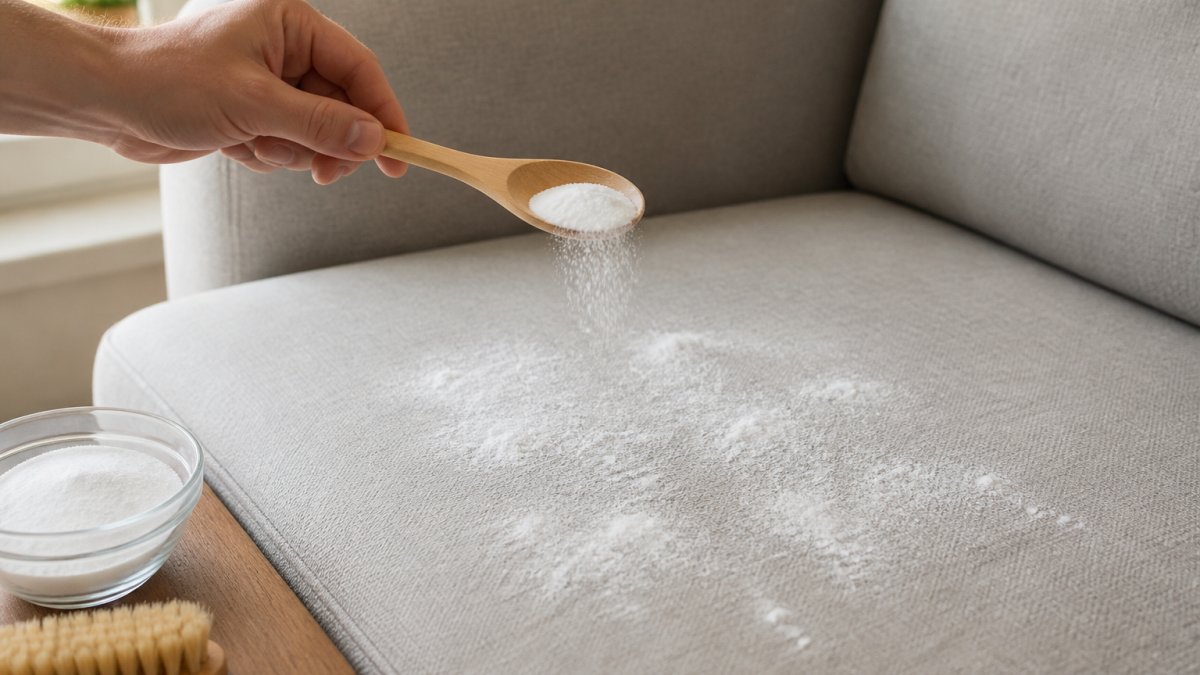
Baking Soda Method
Baking soda absorbs odors through its crystalline structure. It traps odor molecules rather than masking them, which is why it works for food smells embedded in upholstery.
Sprinkle baking soda generously over the affected area. Don't be shy here. Cover the entire section where you smell food odors. Let it sit for at least 15 minutes.
Vacuum thoroughly afterward. Use your regular vacuum with the upholstery attachment. Make multiple passes to ensure you remove all the powder.
Baking soda application steps:
- Sprinkle generously over odor area
- Wait 15 minutes to overnight
- Vacuum with upholstery attachment
- Make multiple passes for complete removal
- Repeat if needed for persistent odors
White Vinegar Solution
White vinegar neutralizes food odors through its acidic properties. It works especially well on protein-based smells and greasy food odors. The vinegar smell dissipates quickly as it dries.
Mix equal parts white vinegar and water in a spray bottle. Never use straight vinegar, which can damage fabric. Test your mixture on a hidden area first. Spray lightly over the affected upholstery. Don't soak it.
Let the solution air dry completely. Open windows and use fans to speed drying. This usually takes 2 to 4 hours depending on humidity and fabric thickness.
Vinegar solution method:
- Mix equal parts vinegar and water
- Spray lightly on affected areas
- Allow complete air drying
- Use fans and open windows for faster drying
- Repeat if odor returns
Activated Charcoal and Fresh Air
Activated charcoal passively absorbs odors from the air around your upholstery. This method works best for lingering smells that have already settled into the fabric.
Place activated charcoal bags near or on top of the sofa. Position them closest to where the food odor is strongest. Leave them in place for 24 to 48 hours.
Combine this with fresh air circulation. Open windows on opposite sides of the room to create cross-ventilation. Sunlight also helps break down odor molecules naturally. If weather permits, move the furniture near a sunny window or outside for several hours.
Charcoal and ventilation approach:
- Place activated charcoal bags on or near sofa
- Leave for 24 to 48 hours minimum
- Open windows for air circulation
- Position furniture in sunlight if possible
- Recharge charcoal bags in sunlight monthly
Best Professional Odor Eliminator for Upholstery
When natural methods aren't enough, professional-grade solutions deliver faster results. These products are formulated specifically to neutralize food odors rather than just cover them up.
PuroClenz offers professional-grade odor elimination designed to permanently destroy stubborn smells in upholstery. Unlike temporary fixes that mask odors, PuroClenz uses a formula that neutralizes odor-causing bacteria and molecules at their source.
For food odors specifically, professional eliminators target the bacteria that develop when food particles decay in fabric fibers. They penetrate deep into upholstery cushions where natural methods can't reach.
The advantage of professional-grade solutions is speed and effectiveness. You're not waiting days for natural methods to work. Results typically appear within hours rather than requiring overnight treatments or multiple applications.
Steam Cleaning to Remove Food Smells from Upholstery
Steam cleaning uses heat and moisture to penetrate deep into fabric fibers and remove food smells upholstery by eliminating embedded odors.
Portable steam cleaners designed for upholstery are effective for this purpose. Fill the machine with water according to instructions. Allow it to heat fully before applying to your sofa.
The key is not to oversaturate the fabric. Use short bursts rather than holding the steam trigger continuously.
After steam cleaning, open windows and use fans to help the upholstery dry completely. This typically takes 4 to 8 hours depending on fabric thickness and humidity.
Steam cleaning process:
- Fill machine with water and allow to heat
- Use short bursts rather than continuous steam
- Work in overlapping sections
- Don't oversaturate the fabric
- Ensure complete air drying after treatment
How Long Does It Take to Remove Odors from a Sofa
The timeline depends on which method you use and how deeply the food smell has embedded itself. Surface-level odors disappear quickly. Deep-set smells take longer to neutralize completely.
Baking soda typically shows results within 24 hours.
White vinegar works faster. The smell often noticeably improves within 2 to 4 hours as the solution dries. Complete odor elimination usually happens within 24 hours.
Activated charcoal requires patience. Initial improvement takes 24 to 48 hours.
Steam cleaning delivers the quickest results for deep-set odors. Many people notice significant improvement immediately after treatment, with complete odor elimination within 24 hours.
Professional-grade products like PuroClenz work within hours. The application is quick, and odor elimination typically completes while you wait or within a few hours of application.
Timeline by method:
- Baking soda: 24 hours
- White vinegar: 2 to 4 hours
- Activated charcoal: 24 to 48 hours
- Steam cleaning: 24 hours
- Professional eliminators: hours to overnight
Prevent Future Food Odors in Your Furniture
Prevention is far easier than dealing with embedded food smells.
Eat away from upholstered furniture whenever possible. Designate eating areas in your kitchen or dining room, not on the sofa.
Clean spills immediately. When food or drinks do spill on upholstery, blot them up right away with a clean cloth.
Vacuum regularly. Weekly vacuuming removes food crumbs and debris before they attract bacteria.
Use removable cushion covers if your sofa allows it. Washable covers protect the underlying fabric from spills and odors.
Maintain good air circulation in your living room. Open windows regularly to let fresh air flow through.
Prevention habits:
- Eat away from upholstered furniture
- Clean spills immediately
- Vacuum weekly with crevice tool
- Use removable, washable cushion covers
- Maintain air circulation in the room
Common Mistakes to Avoid When Removing Food Smells
Understanding what doesn't work saves you time and money.
Don't rely only on air fresheners or scented sprays. These mask odors temporarily but don't eliminate them.
Avoid oversaturating fabric with liquid solutions.
Don't skip the preparation step. Vacuuming before treatment isn't optional. Food particles feed bacteria that create the odor.
Resist the urge to use bleach or harsh chemicals on upholstery. These can damage or discolor fabric.
Don't expect immediate results from passive methods like charcoal. These take time to work.
Avoid treating only the surface when the smell comes from deep within cushions. Surface treatments won't reach embedded odors.
- Relying only on air fresheners
- Oversaturating fabric with liquid
- Skipping vacuum preparation
- Using bleach or harsh chemicals
- Expecting instant results from passive methods
- Treating only the surface of deep odors
Food smells trapped in upholstery don't have to become permanent problems. Whether you choose natural methods like baking soda and vinegar or opt for professional-grade solutions, the key is addressing the odor source rather than masking it. PuroClenz eliminates food odors permanently through its professional formula designed to destroy odor-causing bacteria, not just cover them up. Get started with PuroClenz's odor elimination solutions and restore your furniture to its fresh, clean condition.
Frequently Asked Questions
What is the best deodorizer for neutralizing food smells from upholstery?
The best approach depends on odor severity. For light smells, baking soda works well as an affordable odor absorber. For embedded food odors, professional-grade solutions like PuroClenz permanently eliminate odors rather than masking them. Steam cleaning also effectively removes deep-set food particles and their odors. For rental properties or vehicle inventory, PuroClenz's drop-and-go application saves time and delivers consistent results across multiple units.
Does baking soda actually remove odors from upholstery?
Baking soda absorbs surface-level food odors effectively by trapping odor molecules in its crystalline structure. Sprinkle it on the affected area, let it sit for 15-30 minutes, then vacuum thoroughly. However, baking soda works best on fresh smells; deeply embedded food odors require steam cleaning or professional-grade odor eliminators that chemically neutralize odors rather than just absorbing them.
How long does it take to remove odors from a sofa after treatment?
Drying time varies by method. Baking soda works immediately after vacuuming. Vinegar solutions dry within 2-4 hours depending on ventilation and fabric thickness. Steam cleaning requires 4-24 hours for complete drying. Professional solutions like PuroClenz are designed for fast results, with many users reporting fresh-smelling furniture within hours. Air circulation and sunlight exposure speed up the process significantly.
Can I use white vinegar on all upholstery types?
White vinegar works on most colorfast fabrics when diluted properly, but always spot-test first on a hidden area. Avoid vinegar on delicate fabrics like silk or suede. The vinegar smell dissipates as the fabric dries, especially with good ventilation. For valuable furniture or uncertain fabric types, professional cleaning services eliminate the risk of damage while thoroughly removing food odors.